

Franchisor Guide: How to Franchise Your Business & Scale

Franchisor: Your Guide to Successful Franchising
You’ve proven your concept. Now you’re wondering: can this business be replicated by others—successfully, consistently, and at scale?
That’s exactly what franchising is about.
This guide covers what a franchisor really does, the steps to franchise your business, the most common mistakes first-time franchisors make, and the best resources to help you scale with confidence.
What Exactly Is a Franchisor?
A franchisor is the owner of a brand and business system that can be replicated by independent operators (franchisees).
You don’t just “license a logo”—you provide the blueprint: brand standards, operational playbooks, training, marketing guidance, and ongoing support.
In one sentence: the franchisor builds the model and protects it; franchisees operate it locally.
Franchisor vs Franchisee: What’s the Difference?
Franchisor: owns the brand, defines the operating standards, supports the network, and ensures consistency.
Franchisee: invests to operate a unit (or territory), runs day-to-day operations, and follows the franchisor’s system.
Advantages of Becoming a Franchisor
Why franchising rocks (and why franchisors love it)?
Scale with less capital
Franchisees typically fund new openings, allowing you to expand without carrying every build-out cost yourself.
Local operators, local insight
Strong franchisees know their local market, hire locally, and build relationships faster—often improving performance at the unit level.
Recurring revenue model
Franchise fees, royalties, and sometimes product/service revenue can create predictable growth when the system is well-structured.
Stronger Brand Presence
More locations = more visibility, stronger brand equity, and a bigger “flywheel” for franchisee recruitment.
Common Franchisor Challenges (and what to watch for)
Franchising is powerful—if your fundamentals are solid. Here are the usual friction points:
Consistency at scale: standards slip when processes aren’t clear or enforced.
Recruiting the right franchisees: one bad fit can create operational and brand damage.
Legal compliance: disclosure documents and agreements require expert support and ongoing rigor.
Support expectations: franchisees need training, marketing help, and operational guidance to win long term.
Steps to Becoming a Successful Franchisor
1) Validate your business is replicable
Your model should be profitable, documented, and teachable—not dependent on one exceptional operator.
2) Build your documentation (the real “franchise product”)
Operations manual, brand standards, training plan, marketing guidelines, and unit economics.
3) Put the legal foundation in place
Work with franchise legal experts to structure your disclosure and agreements correctly.
4) Recruit and train franchisees
Define your ideal franchisee profile, build a selection process, and deliver training that sets them up to perform.
5) Support, audit, improve
Ongoing support + performance monitoring keeps standards high and protects your brand.
Common Mistakes First-Time Franchisors Make
Franchising too early (before the model is proven)
Underestimating documentation (no “system”, just good intentions)
Recruiting anyone with a checkbook (fit > funds)
Weak onboarding and support (franchisees don’t “figure it out”)
No territory logic (overlap, conflict, unfair potential)
No feedback loop (the system never improves)
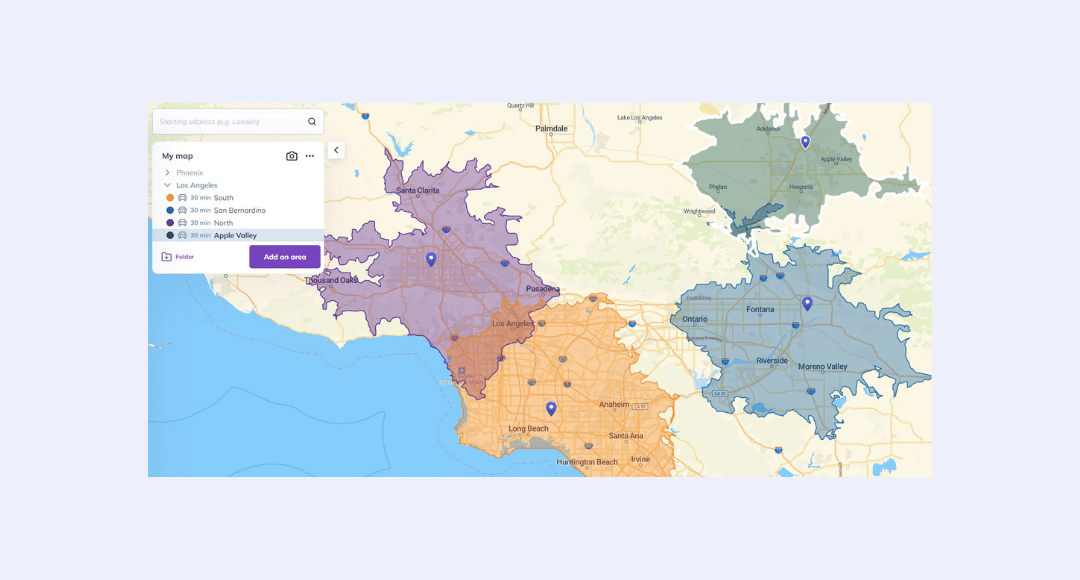
If you’re awarding exclusive areas, territory clarity becomes a growth lever—and a trust lever with franchisee candidates.
See how top teams visualize potential, competition, and boundaries before awarding a unit:
Territories: a Simple Framework for Clarity
You don’t need a 40-page territory thesis. You need a repeatable method:
Step 1 — Choose your territory logic
Drive time, radius, administrative boundaries (ZIP/postcodes), or a mix.
Step 2 — Score potential consistently
Demographics, points of interest, competitors, and market “white space”.
Step 3 — Balance fairness across territories
Avoid one territory being set up to win while another is set up to struggle.
Step 4 — Make it explainable
If you can’t explain a territory simply, selling it to candidates becomes harder.
Leveraging Smappen for Franchise Growth
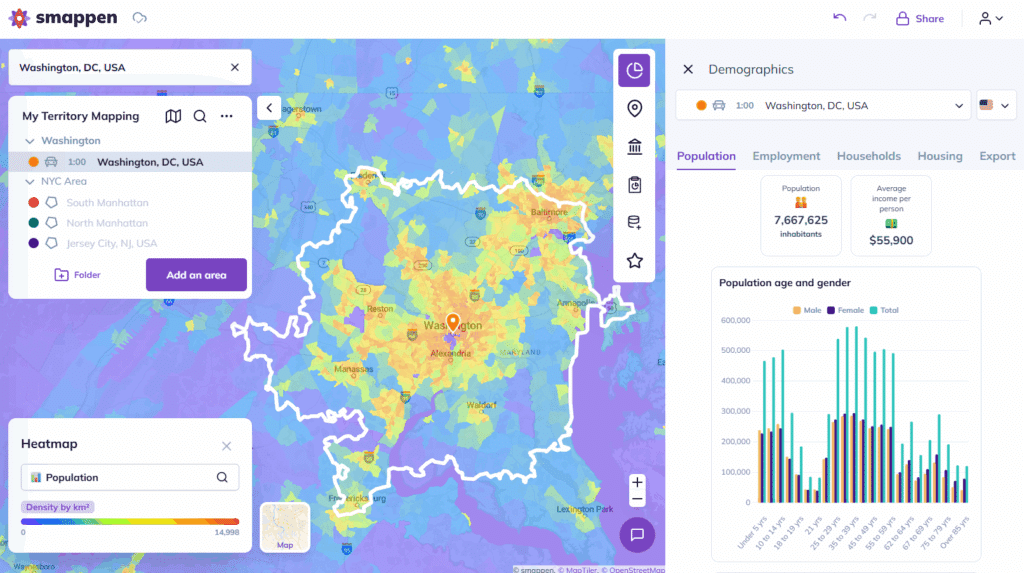
Smappen is a powerful tool that assists franchisors in strategic planning and expansion.
By providing detailed insights into demographics, competitor locations, and market potential, Smappen enables franchisors to identify optimal locations for new franchises, ensuring informed decision-making and successful market penetration.
FAQs on Franchising
What is franchise territory mapping?
A method to define protected areas for franchisees using clear boundaries and consistent market potential criteria.
How do I avoid territory overlap and encroachment?
Use a repeatable territory logic, review boundaries before awarding new units, and document rules for exceptions.
What data should I use to size territories?
Typically: population/households, income, age segments, competitors, points of interest, and drive-time accessibility.
What is the difference between a franchisee and a franchisor?
The primary difference between a franchisee and a franchisor lies in their roles and responsibilities within the franchise relationship:
Franchisor: Owns the brand, business model, and operational framework. Provides training, support, and quality control to ensure brand consistency across all locations.
Franchisee: Purchases the right to operate a business under the franchisor’s brand. Runs the day-to-day operations of their location, adhering to the franchisor’s guidelines and standards.
What legal documents are necessary for franchising?
The primary legal document is the Franchise Disclosure Document (FDD), which outlines the franchisor’s business, fees, and legal obligations. Additionally, a franchise agreement detailing the terms between the franchisor and franchisee is required.
How can Smappen assist in franchise expansion?
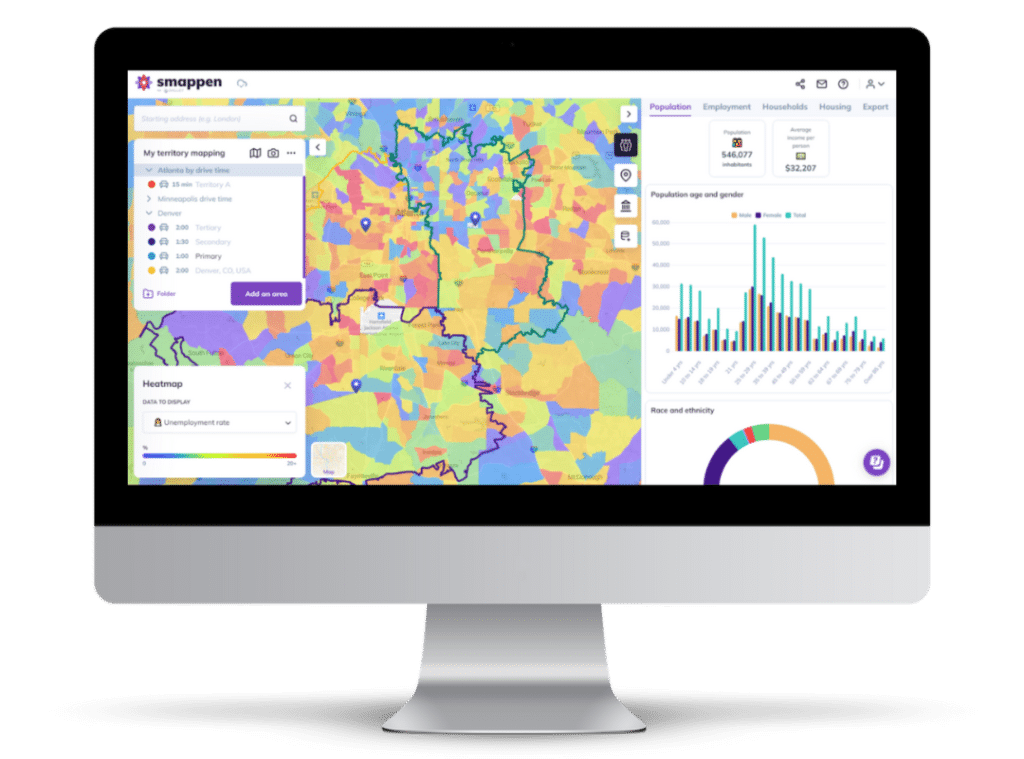
Smappen provides detailed market analysis, helping franchisors identify optimal locations for new franchises based on demographics, competition, and market potential, thereby facilitating strategic expansion.
Read our best articles on franchising
Start here:
Franchisors: What They Are and How to Become One
Discover what a franchisor is, how you can become one, and some of the advantages that come with this path.
Start using smappen now
Franchise Glossary
Franchisor
The brand owner who develops the franchise system, sets standards, and supports franchisees.
Franchisee
An independent operator who pays to use the franchisor’s brand and system to run a local unit or territory.
Franchise Fee (Initial Franchise Fee)
The upfront fee a franchisee pays to join the network and access the franchisor’s system and initial support.
Royalties (Royalty Fee)
Ongoing payments (often a % of sales) franchisees pay for continued use of the brand and system support.
FDD (Franchise Disclosure Document)
A legal document (U.S.) that explains the franchise offer: fees, obligations, risks, and key information about the franchisor.
Item 19 (Financial Performance Representation)
The optional FDD section where a franchisor may share earnings or performance data—if they choose to disclose it.
Initial Investment
The estimated total cost to open a franchise (build-out, equipment, inventory, working capital, etc.), beyond just the franchise fee.
Unit Economics
The financial fundamentals of one location: revenue potential, costs, margins, and what it takes to be profitable.
Operations Manual
The playbook franchisees follow to deliver consistent operations, customer experience, and brand standards.
Brand Standards
Rules that protect consistency across the network (look & feel, service quality, marketing guidelines, products, etc.).
Training Program
Initial and ongoing training that helps franchisees (and their teams) run the business the “franchise way.”
Territory
The geographic area assigned to a franchisee—often defining where they can operate and how the network avoids overlap.
Exclusive Territory
A protected area where the franchisor agrees not to place another franchise unit (or similar channel) within defined boundaries.
Territory Encroachment
When a new unit, corporate location, or channel overlaps a franchisee’s territory and creates conflict or cannibalization.
Site Selection
The process of choosing the best location using customer demand, competition, access/drive time, and market potential.